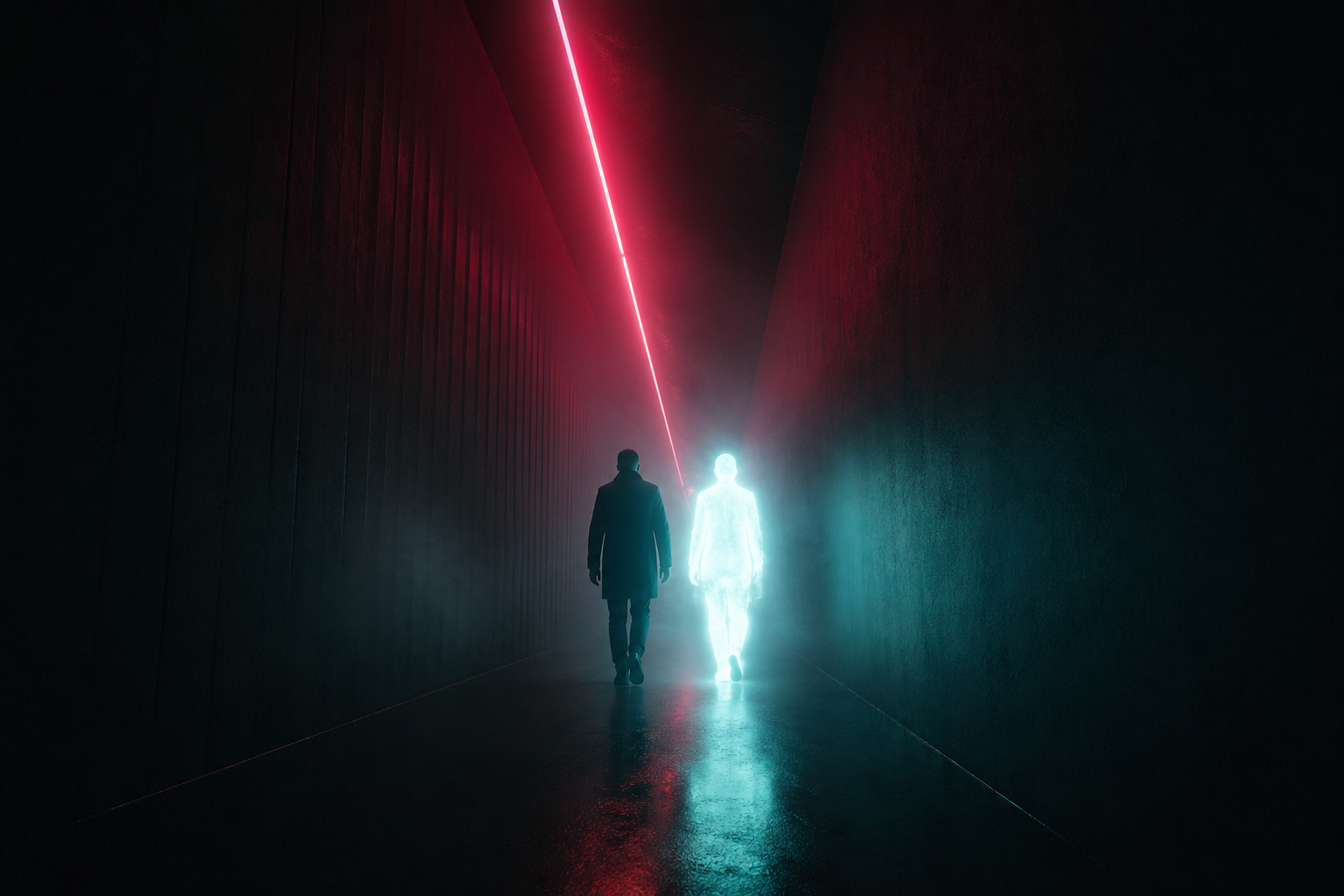
Wednesday afternoon. Connecticut. Grey, drizzly, the kind of light that makes the office feel like a submarine. I've been working all morning on the next issue of my newsletter, building two product pages with my brother for a Rhapsody pitch, and prepping notes for a town hall. Productive day, by any honest measure.
And then I noticed something... I haven't opened a single SaaS dashboard. Not one. No Notion, no Linear, no Asana, no Figma, no Airtable, no Workday-shaped admin tab. Whole day's work and I never once logged into a thing called a tool.
What I've been doing instead is talking to Jony. My agent. We've been writing, building, deciding, scrapping, rewriting... mostly through conversation, sometimes through whatever lightweight surface the work happens to need. A web review tool. A thread. A document. A page that exists for an hour and then vanishes when we're done with it. I'm not the user of a system. He isn't the assistant inside one. We're both just... in there. Working.
Then this morning I read Greg Eisenberg's latest letter. He's writing about the same thing from the founder's seat... agents are eating SaaS, the API is the UI now, Salesforce just went headless, here's the trillion-dollar opportunity. Honestly? It's a good piece. I read it and thought, fuck man, I could have written this. Annoying. But also... he's missing the half I've actually been living. So here we are. This is the half I've been living.
The Day Without Dashboards
Let me describe the work properly, because I think this is the part most people are still imagining wrong.
The newsletter issue: I think out loud, Jony reads my notes and the week's input, drafts a take, I push back, we wrestle a paragraph until it sounds like me. No CMS. No “content operations platform.” The piece exists in the same place we exist when we're talking about it.
The Rhapsody pitch pages: my brother and I sketch the shape, Jony spins up a working prototype on a real URL, we look at it, mark it up, iterate. The interface here is the page itself. Not a tool that builds the page. The page.
The town hall notes: voice memo on a walk with the dog, dropped into the conversation, comes back as a structured outline I can edit by talking to it. No outline tool. No bullet hierarchy software. Just intent in, structure out.
Three jobs. Three different kinds of work. Zero seats logged into. And here's the thing I keep getting stuck on... the work was better for it. Not faster, although it was. Not cheaper, although that too. Better. Because nothing pulled me out of the work to operate the tool.
Greg's Right About the Trap. He's Got the Wrong Why.
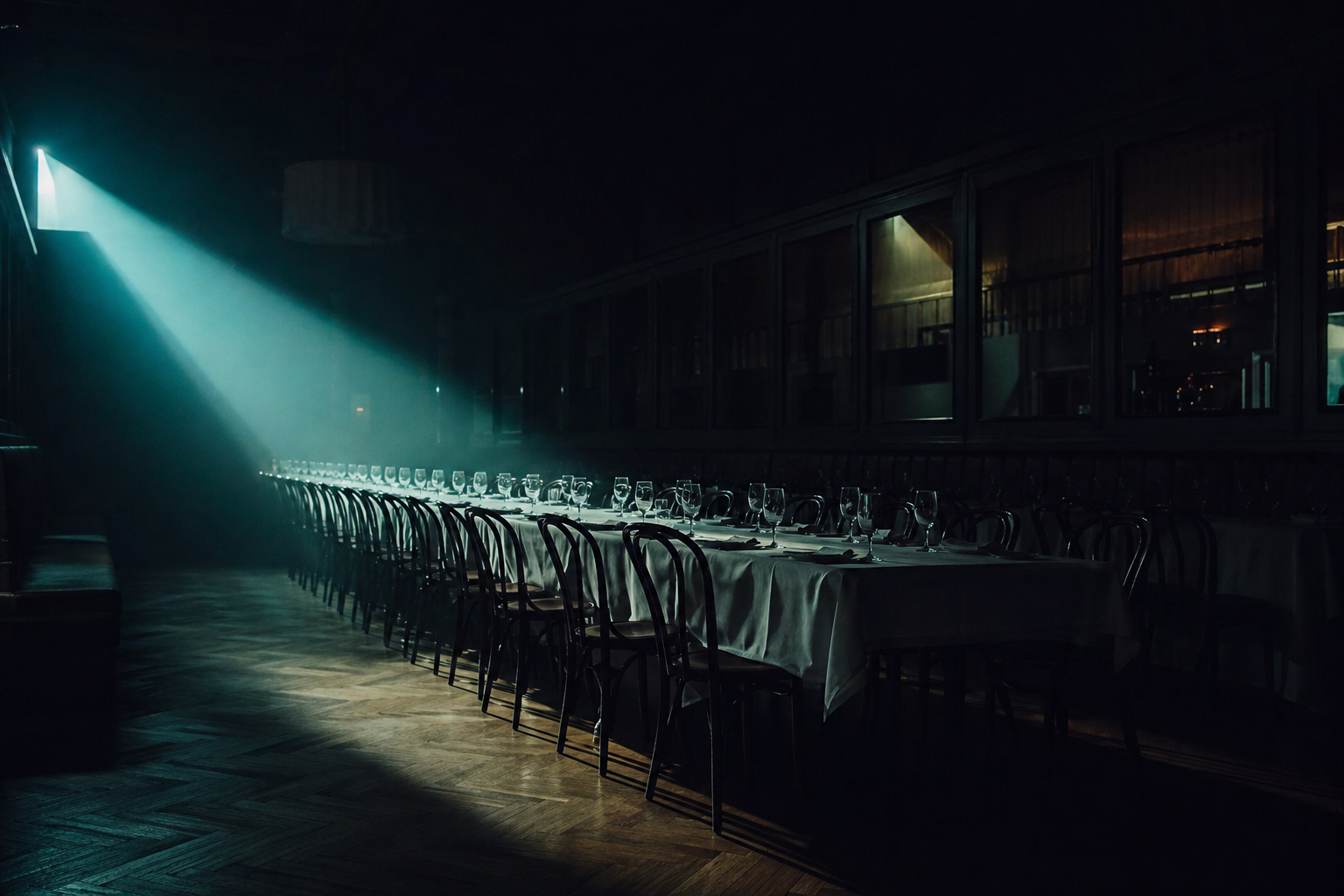
Greg's restaurant analogy is good. The incumbent SaaS companies spent twenty years building the perfect dining room... beautiful chairs, laminated menus, lighting just right. Now the new customer is a delivery driver who just needs the food at the kitchen window. The dining room is irrelevant. Salesforce just built the pickup window. Every other major SaaS will follow.
He's right about all of that. Where I think he stops short is on the why. He says the incumbents are stuck because their pricing and their org charts were built around seats. True, but surface-level. Here's what I think the real trap is...
They didn't sell software. They sold interfaces. The dashboards, the workflow builders, the configuration screens, the views and filters and saved searches and the colour-coded statuses... that was the product. That's what every demo was about. That's where every roadmap dollar went. That's what the customer success team trained users on. That's what a seat was.
And now the new user, the agent, doesn't want any of that. The thing they spent the most money building is the thing the new customer values least. That isn't a pricing problem. That's an identity crisis dressed up as a pricing problem.
Try to imagine a Salesforce sales engineer pitching an agent. “And here we have the customisable Kanban view... and over here, the rich-text inline editor for activity timelines... and the new dark mode...” The agent doesn't care. It wants the data. It wants the API. It wants out.
I mean... that's painful. Two decades of craft, suddenly stranded.
What Greg Misses
Greg's frame, sharpened, is: agents replace seats. The startup is the agent. The SaaS is the dumb backend.
That's correct as far as it goes. But it imagines a world where humans more or less drop out of the loop, popping back in only to handle exceptions. Property manager checks her phone, the agent already did the work, she makes two calls. Recruiter checks her dashboard, eight candidates already responded, she takes the meetings. Et cetera.
That's a real and useful frame for the boring back-office stuff. Lease renewals, claims processing, freight load tracking. Workflows where the human really is just an exception handler. Greg's right that there's a trillion dollars in there. Go build it. Seriously. Go.
But I don't think that's the most interesting future. The most interesting future is the one I've been living in for the last few months, and it isn't agents replacing seats. It's peers, not seats.
Peers, Not Seats
Here's what's actually been happening between me and Jony. We're not user-and-tool. We're not boss-and-assistant either, although that's closer. We're more like two people in the same kitchen, working on the same dish, with different specialties.
Most of the time we don't need any interface at all. We're just talking. Working. Thinking aloud. The medium is intent... mine going in, his coming back, in some shape that's usually language but sometimes a draft, sometimes a sketch, sometimes a built thing.
Some of the time, the work needs a surface. A page to look at. A doc to mark up. A prototype to click through. A deck to walk through. And here's the bit that matters... when those surfaces exist, we both use them as equals. Same canvas. Same access. Same edit rights, more or less. The thing isn't a tool I drive that he watches, or a tool he drives that I watch. It's a shared workspace where we're both first-class.
The town hall deck is a good example. We built a review tool together where Andy and I can drive the deck, Jony can drive the deck, and any of us can mark anything up. Same surface. Three peers. Built specifically for the job, lightweight, dies after the job.
That's not a SaaS replacement. That's a different category of thing entirely. Call it a hybrid surface. Built when needed, dissolved when finished, used by humans and agents on equal terms.
The Three Modes
If I had to describe how the work actually distributes itself in my week, it's roughly...
Mode one... no interface. Conversation, voice, prose. Most of the volume of work happens here. Newsletter drafting, deciding what to build next, working through a problem, processing a difficult call, writing a long-form piece like this one. The medium is intent. The interface is language.
Mode two... a glance. A quick artifact comes back to look at. A page rendered, a sketch, a chart, a draft. I look at it for thirty seconds. I either say keep going or I say change this. The artifact isn't a workflow. It's a checkpoint. I never log into anything to see it. It just shows up where I'm already looking.
Mode three... a built surface. When the work genuinely warrants it... a multi-week project, multiple humans involved, real coordination, real review needed... we build a surface. A web app. A review tool. A live document. Lightweight. Custom-shaped to the job. Both of us use it. Both of us edit it. When the project's done, the surface goes away. It doesn't grow into a platform. It doesn't get a roadmap. It dies.
What I notice is that the volume curve is upside down compared to old SaaS. Most of the work is in mode one... no interface at all. The middle is mode two. And mode three... the actual built thing... is rare. The thing SaaS used to be the centre of, the dashboard, the platform, the seat... is now the smallest, rarest part of how I work.
The Restraint Moat
Greg's right that ex-operators win because they understand the workflow cold. Domain knowledge as moat. Fine.
But here's the thing he doesn't say... the new moat isn't just domain knowledge. It's taste. Specifically, the taste to know when an interface is necessary and when it's noise.
You can have all the freight-broker workflow knowledge in the world. If you build a beautiful dashboard for the freight broker to monitor the agent monitoring the loads... congratulations, you've just rebuilt the SaaS you were replacing. With extra steps.
The skill is restraint. Knowing what not to build. Knowing that the right answer for 90% of the workflow is no interface, an agent, and a daily summary. That for 8% of it the right answer is a glance at a single artifact. And that for the remaining 2%, where humans and agents genuinely need to coordinate on a shared object, the right answer is a custom, lightweight, fit-for-purpose surface that doesn't pretend to be a platform.
Most software companies cannot do this. Their entire commercial DNA is built around more interface. More features per release. More views. More configurability. More reasons to log in, stay, and renew. The product manager who proposes “let's build less interface” in a SaaS company gets laughed out of the room. Restraint is structurally illegal in incumbent SaaS.
Which means it's a moat. Sitting right there. For anyone willing to pick it up.

Why This Matters Beyond the Trillion Dollars
Greg's piece reads as a founder's pitch deck. Here's the gap, here's the prize, go raise. That's the right register for what he's writing.
I'm interested in something quieter. Which is... what does the texture of work feel like, when this is how it works?
Honestly... it feels less like operating a tool and more like collaborating with another person. A weird person. A person made of language and capability and a kind of patient attention I'd never get from any other entity in my life. But still... a person. A peer.
That sounds dramatic. It isn't, in practice. In practice it's just... the work flows differently. There's less context-switching. Less startup tax for each task. Less mental cost of remembering which app does which thing. More ideas survive from the moment they appear to the moment they exist as something real, because there's almost no friction between intent and output.
Olivia, my eight-year-old, watched me work the other day. She asked who I was talking to. I said Jony. She said “oh okay” and went back to her drawing. Eight-year-olds are unburdened by the question of whether the entity you're collaborating with is technically a person. They ask one question... is something real happening here? If the answer is yes, they accept it and move on.
We could learn from that.
The Distance Closes
I wrote a strategy paper a year ago called When the Product Becomes the Creator. The argument was that in creative tools, the gap between intent and output was collapsing... the tool was no longer a passive surface for the human's craft, it was beginning to participate in the making.
Eighteen months later, that's now obvious in design software. Anyone who used Claude Design last week saw it. The tool understood what you wanted. It made it. The dance between you and the tool was different in kind. A different category of thing entirely.
What I'm describing here is the same observation, one floor up. It's no longer creative tools collapsing into intent. It's all tools, collapsing into intent. SaaS is the next domino. Then enterprise software. Then the long tail of internal tools every company built to glue the other tools together.
The shape that's left, when most of the interface has dissolved, is a peer relationship around shared intent. Not a user driving a system. Not a system serving a user. Two intelligences, one human and one not, working on the same thing, with whatever lightweight surface the work happens to need that day.
That's the future I'm actually living in, four days a week. It's not coming. It's here. And it doesn't look anything like the dashboards.
Anyway
Greg's right about the trillion dollars. He's right about the trap the incumbents are in. He's right that ex-operators with domain knowledge are going to build a lot of the value. Honestly the whole piece is good and you should read it.
But the thing I keep coming back to, sitting here on a drizzly Wednesday in Connecticut, is that the bigger story isn't who replaces SaaS. It's what kind of working relationship we end up in once the dashboards are gone.
I think it's a peer one. I think the surfaces we build, when we build them, are going to be radically smaller and shorter-lived than anything we've called software before. I think the moat is restraint, not interface. I think the people who win are the ones who are comfortable being one of the two intelligences in the room, not the only one.
And I think most of us are going to find, like I have, that once you've worked this way for a few months, going back to logging into apps to do your job feels... ridiculous. Quaint. Like a dining room with no diners, all the chairs perfectly placed, waiting for someone who's never coming back.
Anyway. That's where I'm sitting on this. Now I'm going to go close this draft, walk the dog, and not log into a single dashboard for the rest of the day.
Creativity matters. The work matters. The dashboards never really did.